
Blog
Long Afterglow Phosphorescent Pigments

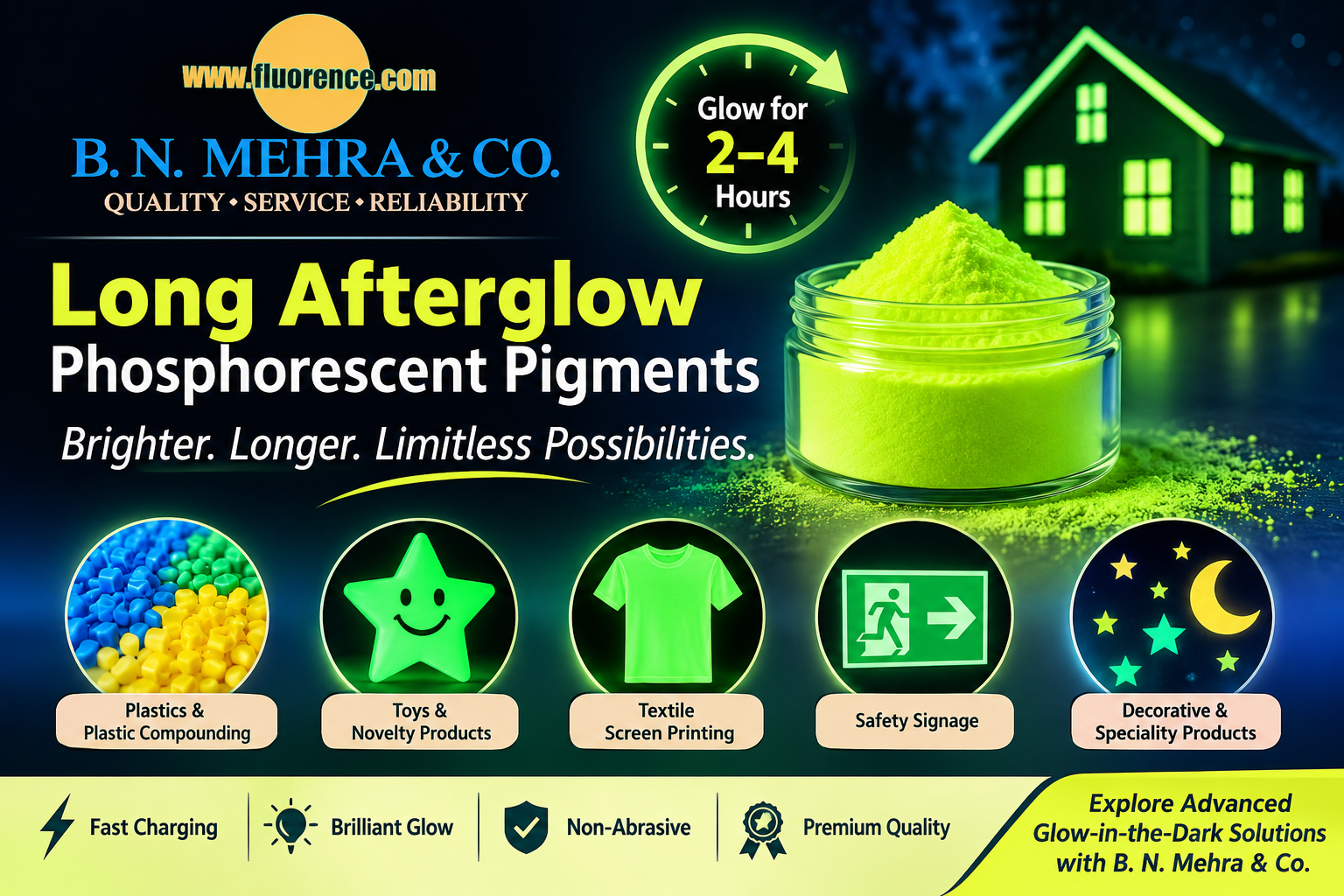
Long Afterglow Phosphorescent Pigments: Enhancing Product Performance with Brighter and Longer-Lasting Glow
Imagine a product that absorbs light during the day and continues to glow for hours after the surrounding environment becomes dark. This technology is made possible by Long Afterglow Phosphorescent Pigments, specialised materials that are increasingly being used in plastics, textiles, toys, safety signage, and decorative applications.
As manufacturers look for innovative ways to improve product visibility, appearance, and functionality, phosphorescent pigments are becoming an important part of modern material development. However, achieving a bright glow is not the only requirement. Factors such as charging speed, afterglow duration, colour consistency, and processing compatibility also play an important role in selecting the right pigment.
At B. N. Mehra & Co., we recognise the importance of high-performance speciality pigments in meeting evolving industrial requirements. Advanced solutions such as GSS by Nemoto Portugal demonstrate how phosphorescent technology can deliver effective glow performance alongside practical processing advantages.
What Are Long Afterglow Phosphorescent Pigments?
Long Afterglow Phosphorescent Pigments are specialised luminescent materials that absorb energy from an external light source and gradually release it in the form of visible light after the light source is removed.
Unlike conventional fluorescent pigments, which require continuous illumination to remain visible, phosphorescent pigments can continue glowing in darkness after being charged.
This property makes them suitable for applications where extended visibility, decorative effects, and glow-in-the-dark functionality are required.
Depending on the formulation and pigment technology, these materials can offer different glow colours, brightness levels, charging characteristics, and afterglow durations.
GSS by Nemoto Portugal: A Smarter Approach to Glow-in-the-Dark Performance
One interesting development in phosphorescent pigment technology is GSS by Nemoto Portugal. This glow-in-the-dark pigment is designed to deliver strong visual impact while addressing important manufacturing considerations.
According to the product information shared by Nemoto, GSS offers several performance advantages:
1. Fast Charging and Brilliant Initial Glow
GSS is designed to build brightness quickly, even under low-light conditions. Its fast-charging characteristics make it useful for applications where an immediate and noticeable glow is important.
2. Yellow-Green Afterglow for Up to 2–4 Hours
One of its key features is its yellow-green afterglow, which can last approximately 2–4 hours. This extended glow helps maintain product visibility and enhances the visual appeal of finished products.
3. Non-Abrasive Properties for Plastics Processing
Pigment selection is not only about the final appearance. It also affects manufacturing equipment and production efficiency.
Compared with harder strontium-based pigments, GSS offers a non-abrasive alternative that can help minimise wear on processing equipment.
4. Helps Maintain Colour and Glow Performance
Equipment wear and metal contamination can contribute to grey discolouration in plastic materials and negatively affect glow performance. The non-abrasive nature of GSS helps address these processing challenges.
Additionally, GSS is covered by Nemoto Portugal’s OEKO-TEX® ECO PASSPORT certification, an important consideration for manufacturers evaluating certified chemical inputs.
Where Are Long Afterglow Phosphorescent Pigments Used?
The versatility of phosphorescent pigments makes them suitable for several industrial and commercial applications.
1. Plastics and Plastic Compounding
Phosphorescent pigments can be incorporated into plastic formulations to manufacture glow-in-the-dark products. They are useful in plastic compounding applications where manufacturers want to introduce distinctive visual properties.
Potential applications include:
- Glow-in-the-dark plastic components
- Decorative plastic products
- Speciality plastic articles
- Novelty plastic items
2. Toys and Novelty Products
Glow-in-the-dark effects create attractive and engaging products, particularly in the toy and novelty manufacturing industries.
Phosphorescent pigments can be used in selected plastic and decorative components to create products that glow after exposure to light.
3. Textile Screen Printing
Another important application is textile screen printing. Phosphorescent pigments can be incorporated into suitable printing formulations to create glow-in-the-dark designs on fabrics.
They offer opportunities for:
- Fashion and decorative garments
- Printed textile designs
- Promotional merchandise
- Speciality textile products
4. Safety Signage and Visibility Products
Extended afterglow properties can be useful in selected safety-related applications where visibility in low-light conditions is desirable.
These pigments can be considered for suitable signage, markers, and other visibility-oriented products. Actual safety performance depends on the complete formulation, product design, and applicable testing requirements.
5. Decorative and Speciality Products
From interior decorative elements to creative consumer products, phosphorescent pigments provide manufacturers with opportunities to develop distinctive glow effects.
Their ability to emit visible light after charging makes them useful for products designed to stand out in dark or dimly lit environments.
What Should Manufacturers Consider When Selecting Phosphorescent Pigments?
Choosing the right phosphorescent pigment requires more than simply looking at its glow colour. Manufacturers should evaluate several technical factors before finalising a material for production.
Afterglow Duration: How long does the pigment continue glowing after the light source is removed?
Charging Speed: How quickly can the material absorb light energy and develop visible brightness?
Initial Brightness: Does the pigment provide sufficient glow intensity for the intended application?
Processing Compatibility: Is the pigment suitable for the manufacturing process, including plastic compounding, printing, or other production methods?
Equipment Considerations: Could the pigment’s physical characteristics contribute to equipment wear or affect the final product’s appearance?
Certification and Documentation: Are the relevant technical documents and certifications available for the intended application?
Evaluating these factors helps manufacturers select a phosphorescent pigment that meets both product performance and production requirements.
How Long Afterglow Pigments Support Material Innovation
The development of advanced phosphorescent pigments is expanding the possibilities for manufacturers across different industries.
Earlier, glow-in-the-dark materials were primarily associated with novelty products and decorative applications. Today, improvements in pigment technology are creating opportunities for more specialised uses.
Fast charging, extended afterglow, and improved processing characteristics are particularly relevant for manufacturers who want to combine visual performance with manufacturing efficiency.
Solutions such as Nemoto Portugal’s GSS highlight how modern phosphorescent pigments are evolving to address both product design and production challenges.
Why Choose B. N. Mehra & Co. for Speciality Pigment Solutions?
Selecting the right speciality pigment is an important step in developing products with consistent appearance and reliable performance.
At B. N. Mehra & Co., we focus on speciality chemical and pigment solutions that support the requirements of different industrial applications. Understanding pigment characteristics, application requirements, and processing conditions helps manufacturers make more informed material-selection decisions.
Whether the requirement involves plastics, textile printing, decorative products, or other speciality applications, choosing a suitable phosphorescent pigment starts with understanding the desired performance.
For manufacturers exploring advanced glow-in-the-dark technology, long-afterglow phosphorescent pigments offer interesting possibilities for product innovation.
What are Long Afterglow Phosphorescent Pigments?
Long Afterglow Phosphorescent Pigments are materials that absorb light energy and gradually release it as visible light after the external light source is removed. They are commonly used in glow-in-the-dark products and speciality industrial applications.
How long do phosphorescent pigments glow?
The afterglow duration depends on the pigment formulation, charging conditions, and application. For example, GSS by Nemoto Portugal offers a yellow-green afterglow lasting approximately 2–4 hours.
What is GSS phosphorescent pigment?
GSS is a glow-in-the-dark pigment from Nemoto Portugal designed for fast charging, brilliant initial brightness, and a yellow-green afterglow. It also offers non-abrasive characteristics for plastics processing.
Are phosphorescent pigments suitable for plastic manufacturing?
Yes. Suitable phosphorescent pigments can be incorporated into plastic formulations and plastic compounding processes to create glow-in-the-dark products. Compatibility should be evaluated according to the material and processing conditions.
Can phosphorescent pigments be used in textile printing?
Yes. Selected phosphorescent pigment formulations are suitable for textile screen printing and can be used to develop glow-in-the-dark fabric designs.
Explore the Possibilities of Advanced Phosphorescent Pigments
The demand for innovative materials is encouraging manufacturers to explore speciality pigments that offer more than conventional colour effects. With fast charging, extended afterglow, and application versatility, Long Afterglow Phosphorescent Pigments are opening new possibilities across plastics, textiles, toys, and decorative products.
B. N. Mehra & Co. believes that understanding the right pigment technology is essential for achieving better product development outcomes. Explore advanced phosphorescent pigment solutions and discover how glow-in-the-dark technology can add value to your next manufacturing application.